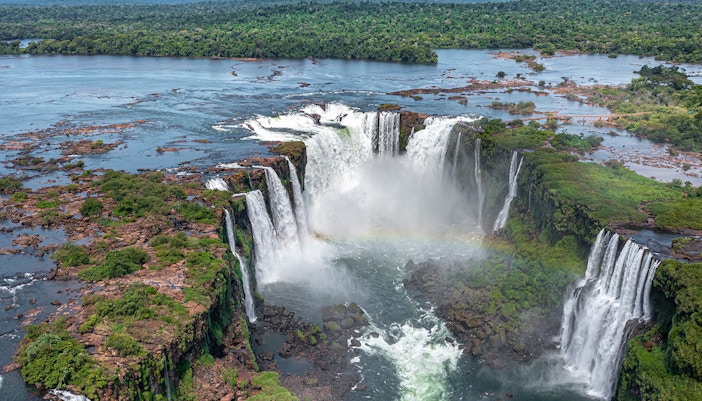
The most powerful section of the falls, where 14 cascades crash into a single roaring chasm. The mist, the thunder, the scale — nothing prepares you for it.

Iguazu Falls is one of the largest and most powerful waterfall systems on Earth, straddling the border between Argentina and Brazil. Visiting means choosing between two national parks, two very different perspectives, and a handful of seriously thrilling add-ons. Most visitors spend at least one full day per side, though a guided combo tour can cover both in a single action-packed day.
The two main gateways are Puerto Iguazu in Argentina and Foz do Iguacu in Brazil, both around 20 km from their respective park entrances. Guided tours from both cities include round-trip hotel transfers and handle border crossings for crossover visits, making them the most stress-free option. If you go DIY, local buses run from both city centers to the park entrances but can get crowded in peak season. Driving gives flexibility but note that parking fills up fast on busy days and border logistics require valid visas for US, Canadian, and Australian passport holders crossing into Brazil.
Quick Visit (2 to 3 hrs)
Brazilian side Cataratas walkway for panoramic views, then the Devil's Throat viewpoint for the dramatic close-up. Perfect if you only have a morning.
Half Day (4 to 5 hrs)
Full Argentine side circuit including Upper and Lower Circuits, eco-train to Devil's Throat, and wildlife spotting in the rainforest. Add the Gran Aventura boat ride if you want to upgrade.
Full Day (6 or more hrs)
Both sides in one day with a guided combo tour. Start with the Argentine circuits in the morning, cross over to the Brazilian side in the afternoon for panoramic views, and finish with a boat ride on whichever side you prefer.
Two Days (Recommended)
Day 1 on the Argentine side with the Gran Aventura boat ride. Day 2 on the Brazilian side with the Macuco Safari. Add a helicopter ride from Puerto Iguazu for the ultimate aerial view.
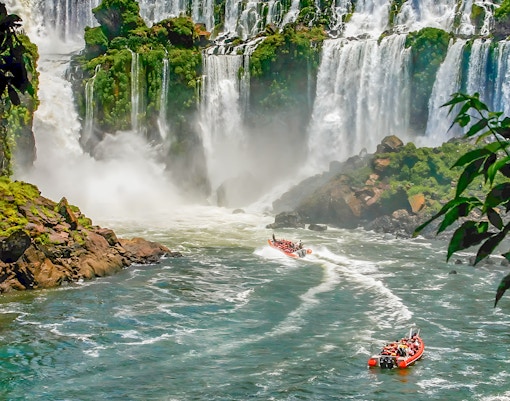
The most powerful section of the falls, where 14 cascades crash into a single roaring chasm. The mist, the thunder, the scale — nothing prepares you for it.
Suspended walkways that take you right alongside the falls for close-up encounters you simply cannot get from the Brazilian side.

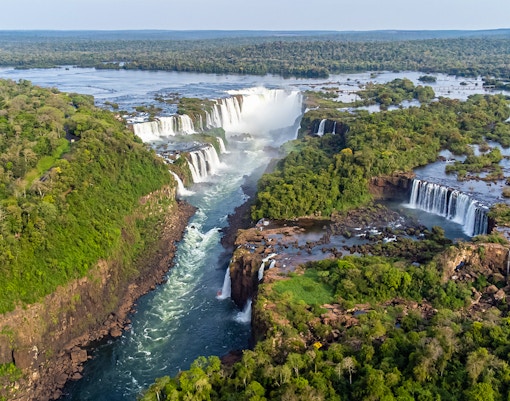
A wide paved walkway along the base of the falls giving you the iconic panoramic view of the entire Iguazu waterfalls system in one sweeping shot.

Over 400 bird species, coatis, capuchin monkeys, and butterflies everywhere. The rainforest surrounding the Iguazu waterfalls is part of the experience.
Visiting Iguazu Falls is easy when you have the right tour. Here is what to think about before you book:
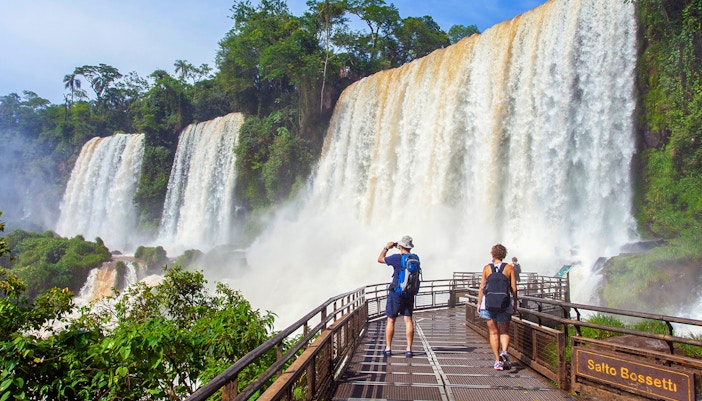
If you want the iconic “standing above the roar” moment, go for Devil’s Throat first thing. On the Argentine side, you’ll use the park’s internal transport (eco-train) to reach the walkway that takes you out over the river and straight to the main viewpoint. Doing it early helps you avoid the mid-morning rush and gives you cleaner sightlines for photos before the railings get packed. The mist is intense here, so make this your “wettest” stop of the day and plan your outfit around it.
Once Devil’s Throat is done, switch to the circuits that give you different angles. The Upper Circuit is about wide, elevated viewpoints where you see the falls stretching across the river system. The Lower Circuit brings you closer to the spray and gives you more dramatic, face-to-face perspectives from below. Do whichever feels better first based on weather: if it’s hot, the lower trail feels refreshing; if it’s rainy, start with upper viewpoints and then decide how wet you want to get.
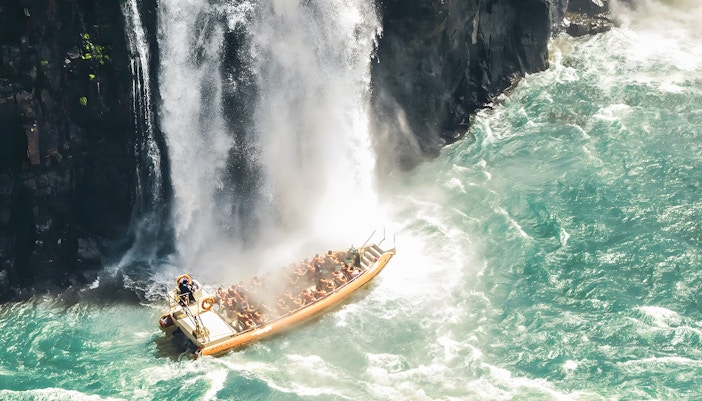
Boat rides and adventure add-ons are worth it, but only if you’ve already covered the core viewpoints. Save them for after the circuits so you’re not racing the clock. If you book a boat safari like Gran Aventura, treat it as your “finale” because you’ll get soaked and you’ll want time afterward to change, dry off, and grab a snack without stress.
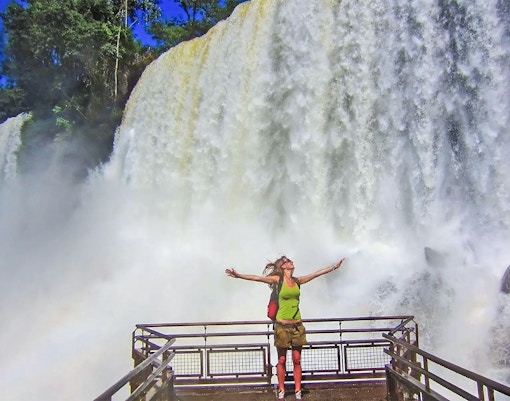
The easiest way to visit. Tours pick you up from Puerto Iguazú (Argentina) or Foz do Iguaçu (Brazil), include park entry, and handle all logistics.
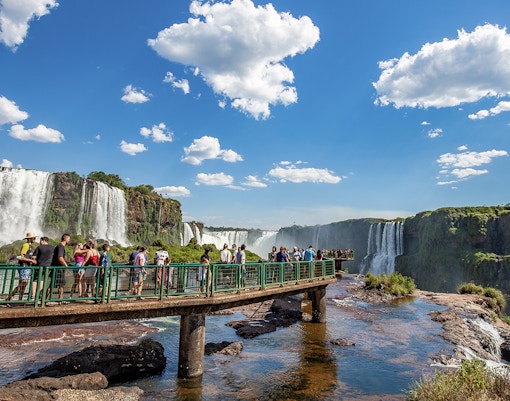
Regular public buses run between Puerto Iguazú town center and the park entrance every 20–30 minutes.
Renting a car gives flexibility to combine Argentina and Brazil sides in one trip. Parking is available at both park entrances.

If you’re coming from Buenos Aires, São Paulo, or Rio de Janeiro, direct flights land at Puerto Iguazú (IGR) or Foz do Iguaçu (IGU). Both airports are 20–30 minutes from the falls.

March–May and August–October These shoulder windows usually balance things best: fewer extreme heat days, manageable humidity, and a calmer crowd pattern compared to peak summer and holiday weeks. Many guides flag April–May and September–October specifically as sweet spots for comfort and crowd control.
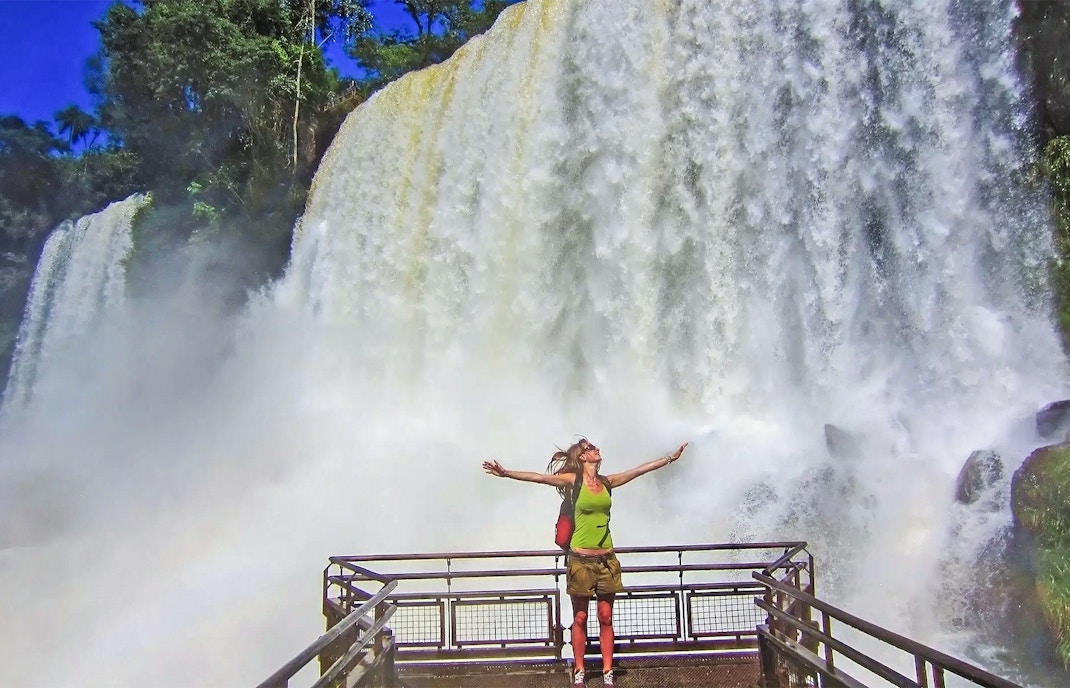
If you’re chasing the “power at full volume” feel, summer and wetter stretches often bring stronger flow, heavier mist, and that drenched, cinematic experience. The tradeoff is heat, humidity, and a higher chance of sudden downpours that can reshape your day. If you’re visiting in wetter periods, build buffer time so a storm doesn’t wipe out your headline viewpoints.
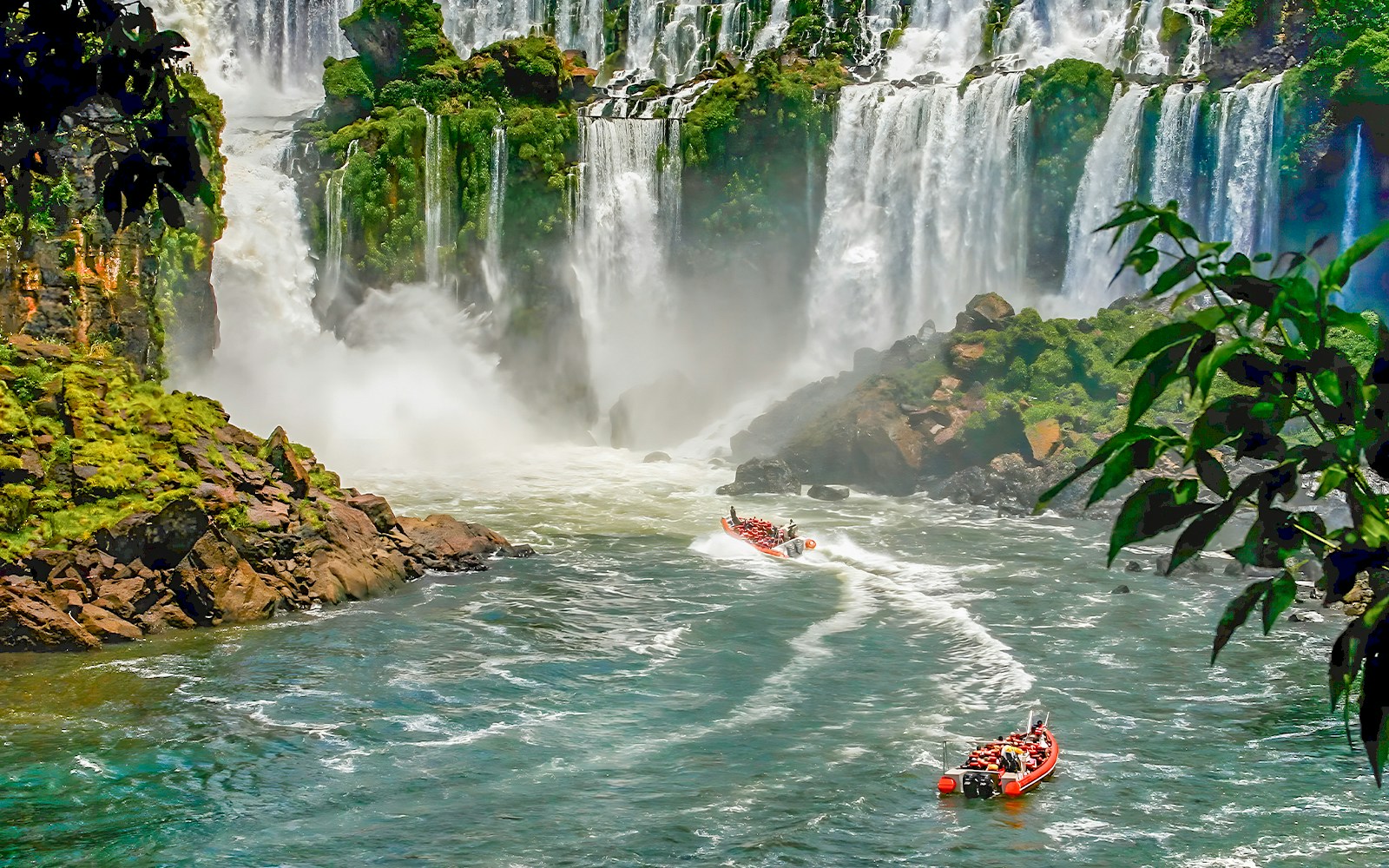

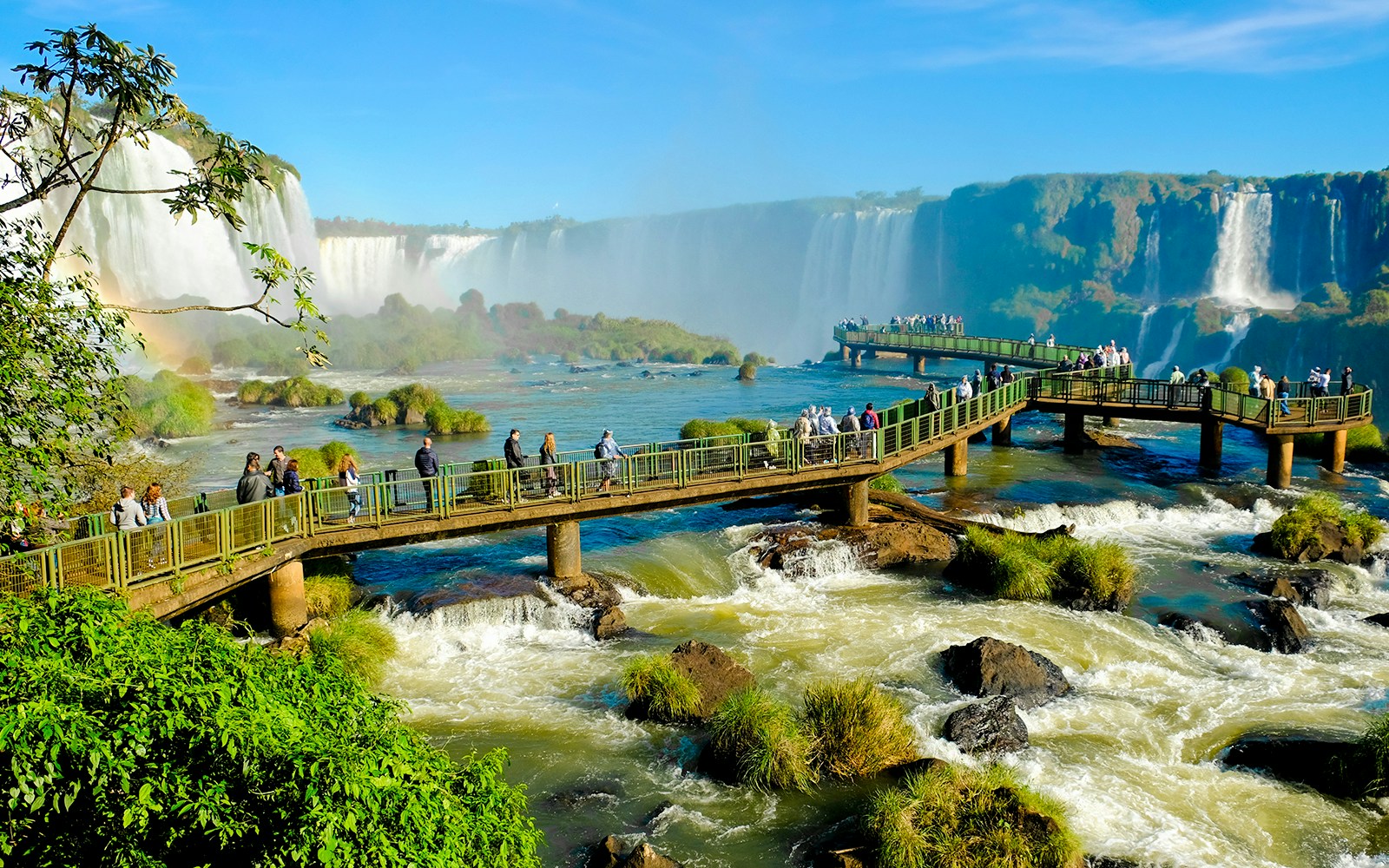

A 10-minute flight over both sides of the Iguazu waterfalls for a birds-eye perspective that is impossible to get from the ground. Departs from Puerto Iguazu with transfers included.
A laid-back riverside town with local restaurants, craft markets, and a lookout over the Triple Frontier where Argentina, Brazil, and Paraguay meet. Great for a relaxed evening after a full day at the falls.
The Brazilian gateway city has its own attractions including the Itaipu Dam, one of the world's largest hydroelectric plants, and the Parque das Aves bird park right at the entrance to the Brazilian side of the falls.
A 7 km jungle hike through Iguazu national park that takes you deep into the Atlantic rainforest. A quieter, more immersive alternative to the main circuits for keen hikers.
If you want a low-stress day when you visit Iguazu Falls, pre-book your national park entry when time slots apply (especially on the Brazil side) and reserve add-ons like Gran Aventura/boat rides early during peak travel periods.
Arrive at opening. On the Argentina side, the standard public hours are 8am to 6pm, and reaching the gates early helps you reach Devil’s Throat before queues build.
A practical route is Devil’s Throat first (train), then Upper Circuit, then Lower Circuit. This protects your time at the busiest area and keeps your walking flow efficient.
Yes. On the Argentina side, standard info lists last entry at 4pm and the last train to Devil’s Throat at 3:30pm (check the day’s signage in case of operational changes).
Do not plan on it. The Brazil side’s official guidance states visitor drone use is not permitted without prior authorization, and protected-area rules also apply on the Argentina side.
Iguazú Falls Entry Tickets: Argentina Side Access
Iguaçu Falls Entry Tickets: Brazil Side Access
From Puerto Iguazú: Iguazú Falls Argentina Side Tour with Gran Aventura Boat Ride & Transfers
Iguaçu Falls Brazilian Side Tour with Macuco Safari Boat Ride
Iguazú Falls Helicopter Ride
From Foz do Iguaçu: Iguazú Falls Tour with Park Entry & Transfers
From Puerto Iguazú: Iguazú Falls Tour with Park Entry & Transfers
From Puerto Iguazú: Iguazú Falls Tour without Park Entry