Iguazu falls  tickets


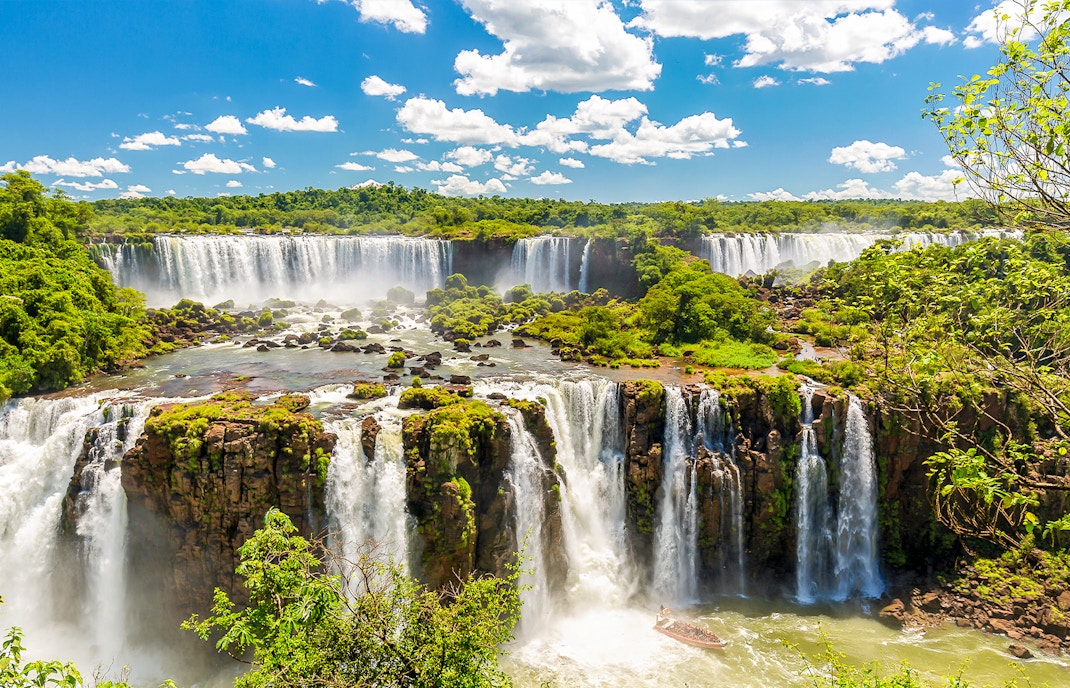
At the border of Argentina and Brazil, Iguazu Falls spreads across subtropical rainforest in a spectacle of roaring water and endless mist. Over 275 cascades tumble in horseshoe arcs, framed by lush greenery and the calls of toucans. Travelers come here not only for the waterfalls but for the living, breathing forest that surrounds them.

Quick facts

  • Official name: Iguazú National Park (Argentina) / Iguaçu National Park (Brazil)
  • Location: Border of Misiones Province, Argentina and Paraná State, Brazil
  • Size: 2,700 meters wide; tallest drop 82 meters
  • Sections: Argentine Falls (Upper, Lower, Devil’s Throat), Brazilian Falls
  • UNESCO World Heritage Site: Declared in 1984 (Argentina) and 1986 (Brazil)
  • Visitors per year: Over 1.5 million

Plan your visit to Iguazu Falls

Timings

  • Argentina side: usually 8am–6pm
  • Brazil side: usually 9am–5pm
  • Last entry is typically 1 hour before closing.
  • Hours vary seasonally, so always confirm before visiting.

Location

  • Border of Misiones Province (Argentina) and Paraná State (Brazil)
  • Closest airports:Puerto Iguazú (Argentina)Foz do Iguaçu (Brazil)

Key regions of Iguazu Falls

Argentine side

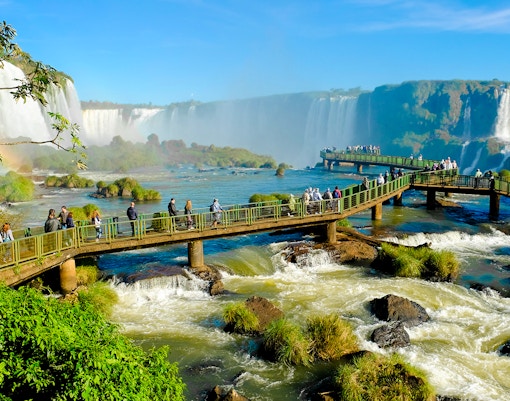
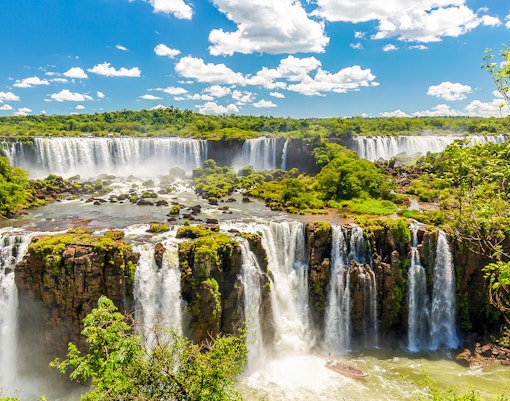
This is where most of the action happens, with nearly 80% of the waterfalls located here. The ecological jungle train carries you deep into the forest to the trailheads. From there, the Upper Circuit gives sweeping aerial views, while the Lower Circuit takes you to the base where you feel the spray on your face. The Argentine side is immersive, designed for those who want to walk among the cascades rather than just look at them.

Brazilian side

Shorter in distance but unmatched in spectacle, this side offers the panoramic postcard view. From its elevated platforms you can take in the full scale of 275 cascades at once. Photographers favor this angle because it captures the enormity of the system in a single frame. It’s less about exploring trails and more about seeing the grand picture.

Devil’s Throat

The centerpiece of Iguazu Falls, this U-shaped canyon swallows half the river into a single plunge. The walkway takes you to its very edge, where the mist rises in constant clouds and the noise vibrates through your body. It is the closest you can come to feeling the falls’ untamed power, and the reason most visitors say Iguazu is unlike any other waterfall on Earth.

Ride the ecological jungle train

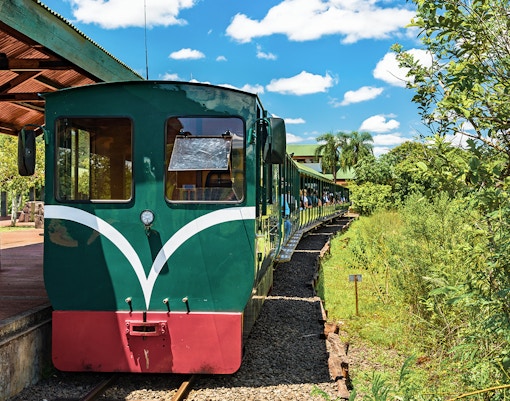
This quiet, open-air train carries you through the dense subtropical forest to the main trailheads. It’s more than just transport, along the way you’ll hear the calls of exotic birds, catch glimpses of coatis, and feel the anticipation build as the roar of Devil’s Throat grows louder with every stop.

Take the Gran Aventura boat ride

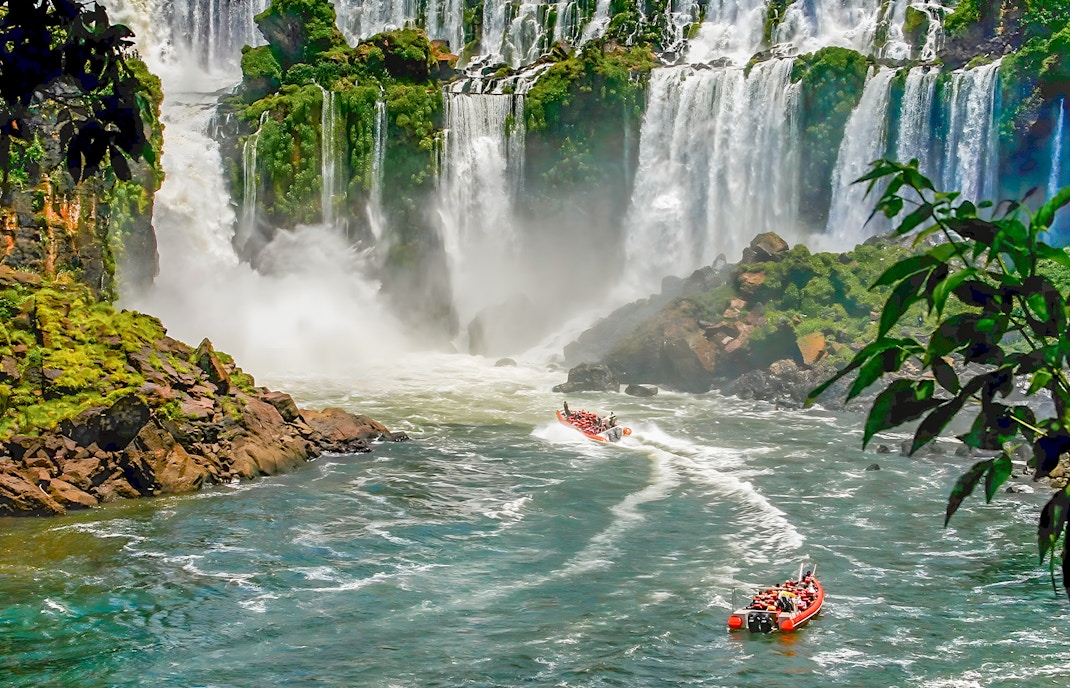
For thrill-seekers, nothing compares to boarding a speedboat and charging upriver into the spray. The ride begins with a rugged 4x4 safari through the jungle before you strap in and plunge headlong into the mist beneath the cascades. You’ll get drenched, but the rush of being so close to the falls is unforgettable.

Spot wildlife on trails

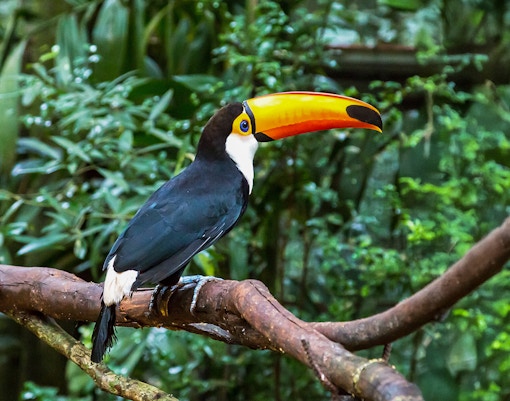
Iguazu is as famous for its rainforest ecosystem as for its waterfalls. Walk slowly and you’ll notice toucans flashing their colorful beaks, capuchin monkeys swinging in the canopy, and giant butterflies landing on railings. Even the mischievous coatis have become part of the experience, often surprising visitors with their antics.

Helicopter flight

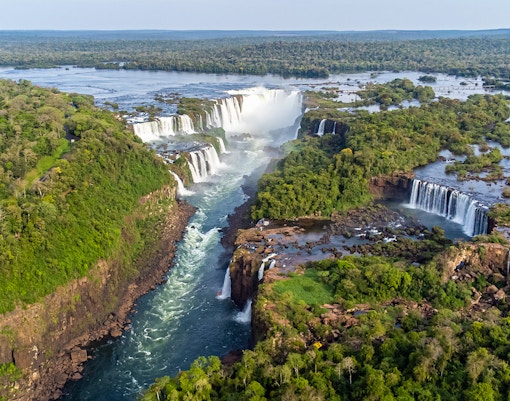
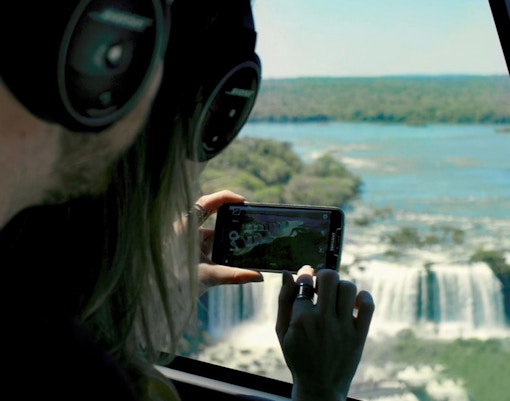
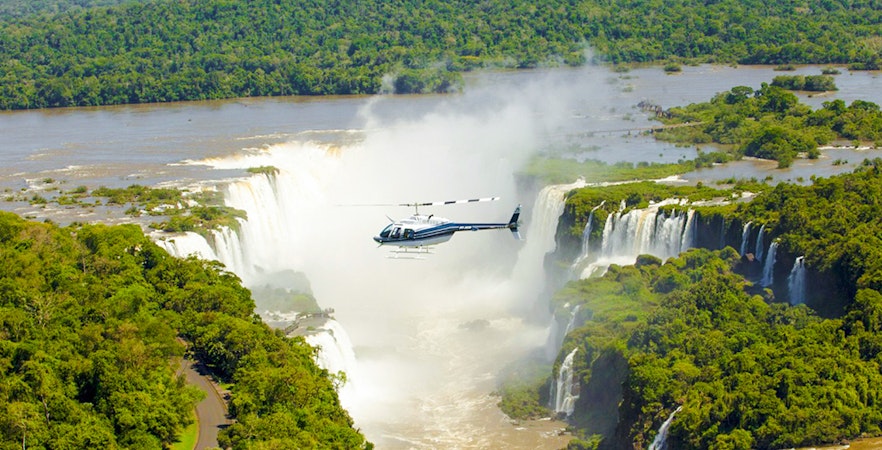
From the Brazilian side, you can take to the skies for an aerial view of the entire waterfall system. The flight reveals how the Iguazu River splits and plunges into hundreds of cascades across nearly three kilometers, framed by endless green forest. It’s the one way to truly grasp the scale of the falls in a single view.

How was Iguazu Falls formed: history and geology

Iguazu Falls was born from volcanic activity over 135 million years ago. Lava flows hardened into basalt layers, and tectonic shifts carved the Paraná Plateau. As the Iguazu River cut through this basalt, fractures formed the cliffs that today carry 275 waterfalls. The Guaraní people lived along these waters long before Spanish explorers first recorded the falls in the 16th century. Legends tie the Devil’s Throat to mythic battles between gods, reminding visitors that Iguazu is as much a cultural landmark as a geological wonder.

Iguazu Falls wildlife

The rainforest here is a sanctuary for over 2,000 plant species and 400 bird species. Toucans, parrots, and great dusky swifts dart across the mist. On the trails, coatis often scavenge for food, while capuchin monkeys swing above. Rare jaguars and pumas roam deeper in the jungle, and giant otters swim in the rivers. Seasonal migrations bring colorful butterflies that often land on visitors near the walkways. This biodiversity makes Iguazu Falls not just a spectacle of water, but a living rainforest to explore.
Frequently asked questions about Iguazu Falls

March to May and August to October bring mild weather and good water flow.